BioTechniques News
Tristan Free
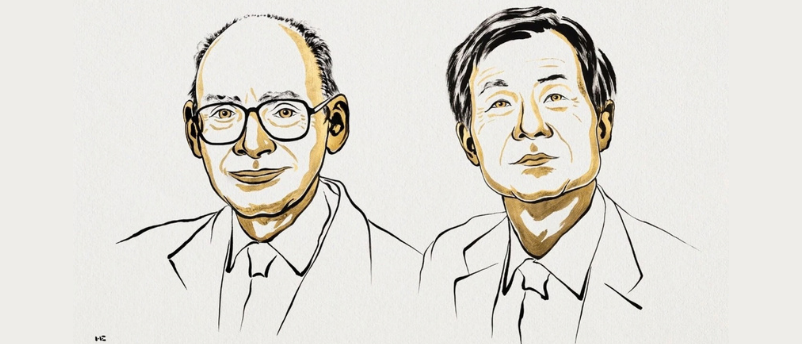
Essential molecules like amino acids and sugars exist as two non-identical mirror-image variants, although only one of these is found in nature. How this chemical asymmetry emerges remained a mystery to scientists for over a century, until Henri Kagan (Université Paris-Sud, France) and Kenso Soai (Tokyo University of Science, Japan) finally found a solution. For their efforts in uncovering these secrets of homochirality, they have been awarded the Nobel Prize in Chemistry 2026.
Chirality describes an object that has two distinct versions, or enantiomers; essentially, one is ‘left-handed’ and the other ‘right-handed’. This presents problems when designing new medicines: many drugs are chiral, with one enantiomer having the desired therapeutic effect and the other, potentially, causing unwanted side effects. As a result, creating the correct version of a molecule is vitally important.
Life’s molecular machinery is what we call homochiral: living organisms contain just one of these mirror-image forms of a molecule, and the other version is rarely found in nature. In the lab, however, it’s a different story. Before Kagan and Soai’s groundbreaking work, homochirality had never been reproduced, and as such, chemists had no idea how it materialized.
Who won the Nobel Prize in Physiology or Medicine 2026?
As the phrase goes, ‘Great oaks, from little acorns grow’ and just so goes the story of the Nobel Prize for Physiology or Medicine 2026.
A chronology of chirality
Our understanding of chirality stretches back to Louis Pasteur, the French pharmacist who invented pasteurization, pioneered the germ theory of disease and developed a number of life-saving vaccines. In the mid-19th century, his colleagues were studying tartaric acid – an important ingredient in wine production – when they noticed that the compound sometimes bent polarized light to the right, while at other times, it didn’t have any effect at all. His curiosity piqued, Pasteur examined crystals of tartaric acid under the microscope, identifying two mirror-image variants. Surely enough, when he separated them out and dissolved them, he found that one bent polarized light to the right and the other to the left. Combined, there was no effect on the light. Then, in 1857, while investigating bacterial fermentation of tartaric acid, Pasteur realized that the enantiomer found naturally in grapes, which bends light to the right, was fermented readily, whereas its mirror-image molecule was not, spawning the idea that life’s chemistry could be chiral.
Fast forward to the early 1900s, and the German chemist Willy Marckwald conducted the first asymmetric reaction, using a chiral catalyst to drive formation of one enantiomer over the other. This was followed, in 1953, by a theoretical study published by the University of Bristol’s (UK) Charles Frank. In it, Frank presents a mathematical solution to a question that had plagued scientists studying chirality since its discovery: how did natural enantiomer asymmetry arise? He posited that a chemical reaction must satisfy three criteria to result in homochirality: the reaction must form the catalyst itself (autocatalysis); the formation of one enantiomer must be accelerated (enantioselective or asymmetric catalysis); and enantiomers must deactivate one another (mutual antagonism). “A laboratory demonstration is not necessarily impossible,” Frank wryly concluded.
Autocatalysis is a well-documented phenomenon in organic chemistry, as is enantioselective catalysis – breakthroughs in the latter were awarded the Nobel Prize in Chemistry in 2001 and 2021 – but mutual antagonism, and a combination of autocatalysis and asymmetric catalysis (asymmetric autocatalysis), had, at this point, never been described.
 Deadly flowers may unlock the secret to synthesizing potent new medicines
Lurking within two deadly blooms, researchers have discovered a suite of enzymes that catalyze the production of an essential metabolite, potentially opening the door to new medicines.
Making chemistry imitate life
Such was the research landscape prior to Kagan and Soai’s Nobel Prize-winning work. Then, with a major breakthrough in 1986, Kagan achieved non-linear effects in asymmetric catalysis, documenting an asymmetric epoxidation – a functionalization reaction that converts double bonds between carbons into epoxides, via the addition of an oxygen atom across the bond – which produced more of one enantiomer than was previously thought possible.
Four years later, Soai reported a reaction in the presence of a chiral catalyst that was both autocatalytic and enantioselective, although less of the desired product was produced than the catalyst. Finally, in 1995, he succeeded in generating an asymmetric autocatalytic reaction in which the product had a higher excess than the catalyst, meeting all of Frank’s criteria for homochirality, although it didn’t reach 100% enantiomeric purity. Eight years on, he went one step further, designing a reaction that formed a chiral catalyst that then formed itself. Called the Soai reaction, it was the first-ever chiral chemical reaction created from a non-chiral combination of molecules, aside from by life itself.
By providing experimental validation of Frank’s model, Kagan and Soai have deepened our understanding of the genesis of homochirality, a feat that has been transformative for pharmaceutical manufacturing, as well as the production of novel flavorings, scents, agricultural chemicals and materials. And let’s not forget, it’s helped solve one of chemistry’s biggest mysteries.
The post Solving a century-old mirror-image mystery wins Nobel Prize in Chemistry 2026 appeared first on BioTechniques.
Powered by WPeMatico