
BioTechniques News
Tristan Free
As the phrase goes, ‘Great oaks, from little acorns grow’ and just so goes the story of the Nobel Prize for Physiology or Medicine 2026, in which a fairly simple light-sensitive single-celled alga proved the key to solving a decades-long conundrum conceptualized and left unsolved by scientific titan Francis Crick, ultimately resulting in the field of optogenetics.
Still relentlessly inquisitive two decades after his elucidation of DNA’s structure, Crick had turned his attention to neuroscience. Seeing that existing methods in the 70s were able to map regions of the brain to certain functions and behaviors, without being able to demonstrate direct causality or to provide a degree of specificity with regard to the specific neurons responsible, he identified the need for a functional neuronal switch. This switch, he proposed, would need to be a single molecule that could be programmed into the neurons of live animal subjects and be used to switch these neurons on and off, preferably in response to the stimulus of light. Crick acknowledged at the time that such a solution may be fanciful or, at the least, that it would require a Homeric effort to produce.
And so it proved. For decades, researchers attempted to solve Crick’s puzzle with a number of approaches. These included the use of lasers to activate the mildly light-sensitive neurons of sea slugs or using exogenous fluorescent dyes, approaches that were slowly abandoned as they proved too damaging to tissues and too cumbersome to be experimentally practical. Alternative studies searched through the domain of archaea, identifying light-driven ion pumps as a potential solution. However, these operated too slowly, driving ions against the electrochemical gradient, making them unable to induce anything akin to an action potential, limiting their utility.
 Exploring insomnia and the menopause: where are we and what is needed from the preclinical research?
Explore the principal issues in the field of insomnia and the menopause, the mechanisms underlying this association, how researchers are exploring it, the shortfalls in current treatments and what clinicians are looking for from early-stage researchers.
A great field, from a little alga
Little changed until the early 90s when Peter Hegemann (Humboldt University of Berlin, Germany) began experimenting on Chlamydomonas, a single-celled alga that is able to swim towards a light source, detecting it using a tiny orange ‘eye spot’ on its cell surface. Hegemann used suction electrode recordings to investigate this spot, finding that it processed the light stimulus into activation of the alga in just half a millisecond, 20 times faster than the human eye. From these findings, he hypothesized that the alga could be using a light-sensitive ion channel, a previously undiscovered class of protein, to process the signal, thus offering a significantly simplified and shortened pathway from stimulus to effect. This hypothesis shifted the hunt for a solution to Crick’s problem from signaling pathways to a single molecule.
However, studying the proteins of the eye spot presented a challenge as they were highly unstable and often denatured when isolated. This continued to prove an issue until the turn of the century when a group of researchers from Japan created the Chlamydomonas expressed sequence tag database. Hegemann was able to search these data for genes that resembled those of known light-capturing proteins, finding two that his group initially named channelopsin (CHOP)-1 and 2.
It was at this point that Hegemann reached out to his old colleague Georg Nagel (University of Würzburg, Germany), whose expertise in protein expression proved invaluable.
However, Hegemann and Nagel were not the only ones investigating this space, and since the expressed sequence tag database had been released, the race was on to characterize these proteins. Kwang-Hwan Jung and Oleg Sineshchekov, working in the lab of John Spudich at the University of North Texas Health Science Center (TX, USA) had already set to work using RNAi to silence these genes, demonstrating that they were necessary for generating photoreceptor currents. Shortly afterwards, a group led by Tetsuo Takahashi at Toho University (Tokyo, Japan) used immunofluorescence to reveal the localization of CHOP-1 and 2 in the eye spot of Chlamydomonas.
However, it was Hegemann and Nagel’s approach that provided conclusive causative proof. Nagel introduced CHOP1 into frog eggs that successfully expressed the protein, which then localized to the cell surface membrane. Illuminating the cells, they were able to show that CHOP1 opened in response to light, primarily enabling protons to flow through the channel protein into the cells, resulting in an electrical signal. Similar tests with CHOP2, which expanded to include experiments in human embryonic kidney cells, demonstrated similar results, making the cells light sensitive. However, CHOP2 had a blue-light-shifted activation wavelength and was less specific, acting as a broad, non-selective cation channel. Tests of truncated versions of proteins showed that they retained their function when just core aspects of the protein remained, confirming that both the light sensing and ion channel functions were conducted by the same protein, leading them to be formally characterized as channelrhodopsin-1 (ChR1) and 2 (ChR2).
Nagel and Hegemann published their results in 2003, revealing that they had conclusively characterized two single-component, light-gated ion channels that could be used to generate electrical impulses in cells using light: the very tool that Crick had yearned for three decades before.

The neuroscience of motivation: how does the brain sustain its drive?
New research pinpoints neurons involved in maintaining motivation in rats, potentially paving the way towards new treatments for ADHD, depression and addiction.
Turning a tool into a technique
Karl Deisseroth (The Howard Hughes Medical Institute, MD, USA and Stanford University, CA, USA) – driven by his work in psychiatry during the 90s, where treatments were scarce and, when they did exist, often had severe side effects or limited efficacy – had been on the hunt for just such a protein. When he read Nagel and Hegemann’s paper, he contacted Nagel requesting the sequence for ChR2. He introduced the sequence into rat nerve cells, which expressed the protein and could be activated by blue light. Sharing these results in 2005 and embarking on a series of collaborations, Deisseroth led the search for more light-gated ion channels, naming the method ‘optogenetics’ in a 2006 review.
In 2007, he successfully incorporated ChR2 into specific neurons of live mouse motor cortices and developed a thin optical neural interface using laser diodes coupled to optical fibers, which could be fed into the mouse brains through a hole in the skull. Using this approach, Deisseroth and his team were able to control the movement of the mouse whiskers. The same year, using a similar approach to activate neurons suspected to be involved in wakefulness, the team was able to wake up mice by illuminating the neurons.
One of the most famous early examples of the complex and expansive new experiments that could be conducted with optogenetics, resulted from a collaboration between Deisseroth and Susumu Tonegawa (MIT, MA, USA), in which they observed the cells activate as mice experienced fear and then reactivated those same cells when the mice were safe. This led the mice to express a fear response despite their safety, demonstrating the newfound ability to activate an engram: the specific pattern of neural pathways formed when a memory is created.
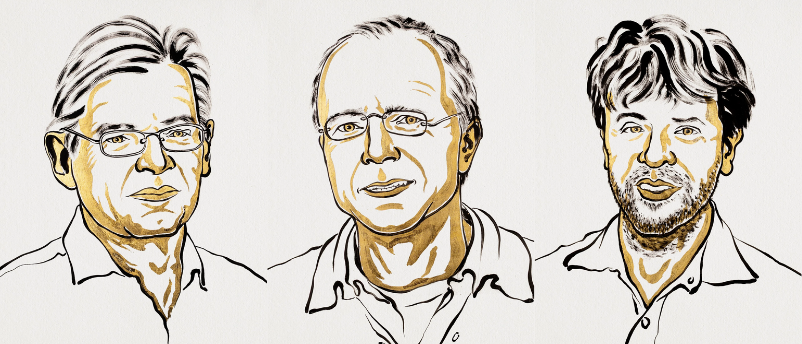
Optogenetics has gone on to establish a vast array of breakthroughs in neuroscience, and its applications span the expansion of our basic understanding of the brain, to disease and behavioural research and therapeutic development. For their significant contribution to this vital field, Peter Hegemann, Georg Nagel and Karl Deisseroth have been awarded the Nobel Prize in Physiology or Medicine 2026.
The post Who won the Nobel Prize in Physiology or Medicine 2026? appeared first on BioTechniques.
Powered by WPeMatico