

BioTechniques News
Beatrice Bowlby
Original story from the University of Gothenburg (Sweden).
Researchers at the University of Gothenburg (Sweden) have identified a key protein that allows the virus that causes genital herpes to get into the nervous system. The discovery, made in experiments on mice, could pave the way for future vaccines against the disease.
Genital herpes is primarily transmitted through sexual contact and is one of the most common viral infections in the world. The HSV-2 virus establishes a lifelong infection by entering nerve cells, where it is lying dormant for a long time and be reactivated at a later time.
Many of those who carry the virus do not experience any noticeable symptoms, while others have recurring problems with, for example, tenderness, burning, blisters and ulcers. The symptoms can be relieved with medication, but despite extensive research, there is no approved vaccine against HSV-2.
The current study presents the discovery of a protein that plays a crucial role in HSV-2’s journey from the site of infection to the nervous system. The same protein is also promising as a target for a future vaccine.
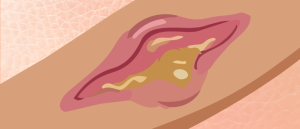 ‘Bionic skin’ kills bacteria and cools temperature to speed up infected wound healing
A bionic cooling skin that marries protection, comfort and potent antibacterial activity could be what’s been missing in the treatment of infected wounds.
Protective immune response
The researchers examined glycoprotein G, a protein found on the surface of viruses and infected cells. Experiments on mice with genital HSV-2 infection showed that viruses that lacked a certain form of membrane-bound glycoprotein G could still multiply in the mucosa, but had a severely reduced ability to spread to nervous tissue and the central nervous system.
“This suggests that glycoprotein G plays a critical role in the virus’s ability to reach and infect the nervous system,” explained Ebba Könighofer, microbiologist and researcher in infectious diseases at the University of Gothenburg.
The protein’s potential as a target for a future vaccine was also clear. Mice that were made immune with glycoprotein G developed both strong antibody responses and a strong T-cell response. This immune response protected against genital herpes and spread to the nervous system.
Dual function
The study also shows that the sugar molecules that are naturally bound to glycoprotein G – so-called glycans – are important for eliciting an optimal immune response. When these sugar structures were removed, both the T-cell response and the protective effect became weaker.
The research results thus point to a dual function for glycoprotein G. The protein helps the virus spread to the nervous system but can also be used to stimulate protective immunity. “Our results identify glycoprotein G as both a virulence factor and a promising vaccine target. This provides a strong rationale for including the glycosylated form of the protein in future herpes vaccine development,” concluded Rickard Nordén, microbiologist and associate professor at the University of Gothenburg.
This article has been republished from the following materials. Material may have been edited for length and house style. For further information, please contact the cited source. Our press release publishing policy can be accessed here.
The post How does herpesvirus infect the nervous system? appeared first on BioTechniques.
Powered by WPeMatico