
BioTechniques News
Beatrice Bowlby
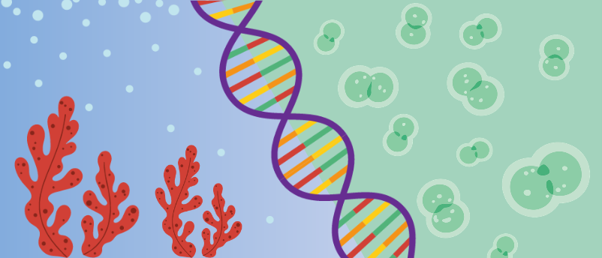
Scientists have created hybrid plant–animal cells – aka ‘planimal’ cells – by transferring algal DNA into a mammalian genome.
Inspired by the evolutionary origin of chloroplasts, researchers from the University of Tokyo (Japan) have demonstrated that mammalian cells are capable of genome-scale horizontal gene transfer, acquiring foreign DNA from algae. The resulting ‘planimal’ cells, as they’ve been dubbed, provide never-before-seen mechanistic insight into genomic hitchhiking in eukaryotes and bring us closer to engineering interactions between evolutionarily distant genomes, which could transform synthetic biology, organelle evolution and genome design.
Horizontal gene transfer drives evolutionary innovation across all domains of life, and while our understanding of it between prokaryotic organisms is well established, the same can’t be said for eukaryotes. The movement of genetic material between eukaryotic species is exceptionally rare, and transfer of larger genomic segments or near-chromosomal structures has never been experimentally demonstrated in living cells, leaving a gaping hole in our knowledge.
Taking a step toward filling this gap, the team behind the recent study sought inspiration from the evolution of chloroplasts more than 1.5 billion years ago, when a eukaryotic cell engulfed a cyanobacterium via endosymbiosis, giving rise to the ancestors of modern red algae, green algae and land plants. The researchers designed a series of experiments to investigate horizontal genome transfer between mammalian cells – Chinese hamster ovary (CHO)-K1 cells – and the red alga Cyanidioschyzon merolae (schyzon).
“We wanted to understand whether entire chromosomes could cross the enormous evolutionary divide between algae and animals and whether animal cells could stably maintain and pass on such foreign genetic material to their daughter cells,” Sachihiro Matsunaga, senior author of the research, said of the team’s motivation.
“We also wanted to discover how animal cells accommodate DNA from such a different organism without losing their ability to survive and divide. These questions are fundamental to understanding how genetic material can move across species boundaries and contribute to evolution.”
 Scientists grew tumor organoids in space, and it could yield new brain cancer treatments
Space-grown ‘mini tumors’ advance organoid disease modeling and herald a “new era of orbital oncology”.
To initiate horizontal gene transfer, the team generated a schyzon strain carrying two selection marker cassettes, which were either fused with CHO-K1 cells or added to host cultures for phagocytic uptake. They found that fusion of mammalian and algal cells produced ‘planimal’ cells much more efficiently than engulfment.
Live-cell imaging confirmed the appearance of transferred algal DNA in CHO-K1 cell nuclei after fusion, while genome sequencing and cytogenetic analyses revealed retention of chromosome-scale algal DNA in mammalian cells. One hybrid CHO cell line retained around 16.3 million base pairs of algal DNA – almost an entire 16.5 Mb schyzon genome – including intact chromosomes. A substantial amount of algal DNA persisted for 95 generations without antibiotic selection and could still be detected in the hybrid cells to some extent for 155 generations.
“We have succeeded in creating hybrid chromosomes containing genetic material from both an alga and a mammal, and have shown that this genetic material can be stably passed on to daughter cells through repeated cell divisions,” concluded Matsunaga. “Remarkably, our planimal cells retained nearly an entire algal genome over many generations. This demonstrates that even the vast evolutionary divide between plants and animals can be crossed at the level of chromosomes, without reproduction.”
The scientists also noticed that the transferred algal DNA acquired DNA methylation and repressive histone modifications, both of which are associated with gene silencing. In experiments in CHO-K1 cells lacking a de novo DNA methyltransferase, establishment and retention of transferred algal DNA was reduced, suggesting an epigenetic mechanism by which mammalian cells accommodate foreign genomes.
“Our next challenge is to selectively switch on the genes we need and make them work inside animal cells,” added Matsunaga. “The red alga we use has a remarkably compact genome containing genes for metabolic functions that animal cells do not possess. Our ultimate goal is to activate these biological pathways and give animal cells some of the unique abilities of plants and algae. Imagine animal cells that could sustain photosynthesis for long periods, producing oxygen while using carbon dioxide to make useful organic compounds.”
The post Hybrid ‘planimal’ cells provide first-ever look at genomic hitchhiking in eukaryotes appeared first on BioTechniques.
Powered by WPeMatico