
BioTechniques News
Tristan Free
Expanding the CRISPR toolbox, scientists have introduced a new technology that can rip cancer- and virus-infected cells’ genomes apart, while leaving healthy tissue unharmed.
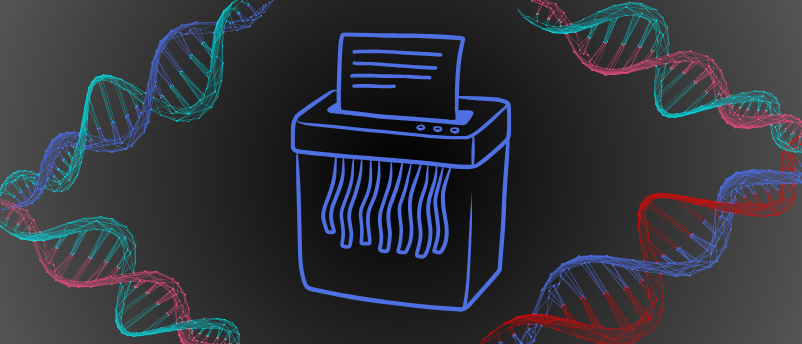
A novel CRISPR platform that utilizes Cas12a2, a recently discovered nuclease, can be used to selectively destroy diseased cells via RNA-triggered DNA shredding, recent research from the University of Utah School of Medicine (UT, USA) suggests. Acting like a paper shredder for the genome, the protein could represent a promising therapeutic tool for treating cancer and viral infections with minimal off-target effects.
Pinpointing and eradicating cells based on their genetic or physiological identity is a cornerstone of life science research and medicine, and is particularly useful for precisely removing diseased cells. However, common methods for achieving this, such as small-molecule inhibitors, toxins and antibodies, cannot be tailored to arbitrary states and are not suited to difficult-to-drug scenarios, which limits their potential applications. CRISPR nucleases offer an alternative, targeting disease-specific RNAs to mark a cell for destruction.
While effective for applications involving bacteria, the enzymes we have at present are largely inadequate for programmed cell elimination in eukaryotic cells. For example, Cas9 and Cas12a introduce targeted double-strand breaks that are poorly repaired in microbes, but are corrected by homology-directed repair or non-homologous end joining in eukaryotes. As a result, researchers are on the hunt for novel nucleases, like Cas12a2, which might help to fill this gap in more complex organisms.
 New genetic discovery could spell this aggressive cancer’s downfall
A newly identified vulnerability of small cell neuroendocrine carcinoma could represent a potential treatment strategy for these aggressive and difficult-to-treat cancers.
To explore the effect of triggering Cas12a2 nucleases in eukaryotic cells, the team behind the recent study first tested its activity in the yeast Saccharomyces cerevisiae. They transformed cells with a plasmid expressing Cas12a2 and a gRNA targeting the transcript of the non-essential gene ADE2. As evidenced by yeast colony counts, under targeting conditions, Cas12a2 reduced transformants by 134-fold versus non-targeting conditions, and there were no measurable signs of DNA repair.
The scientists next examined the effect of triggering Cas12a2 in human cells, electroporating a Cas12a2–gRNA ribonucleoprotein complex, designed to target the RNA transcript for green fluorescent protein (GFP), into a HeLa cell line expressing GFP at high levels. Fluorescence microscopy revealed that electroporated cells failed to proliferate and noticeably decreased in number.
Both these experiments demonstrated that Cas12a2 can ensure the sequence-specific elimination of cells expressing a target transcript.
Moreover, the team quantified the number of double-strand DNA breaks formed in cells via immunofluorescence staining for the endogenous repair protein 53BP1, which forms foci at double-strand breaks. This confirmed that during Cas12a2 targeting, double-strand DNA breaks were the driving force of cell death.
Leveraging their approach to selectively eliminate cells that harbour human papillomavirus and cells with a mutation in the oncogenic KRAS gene, with no observed off-target activation, further demonstrated the therapeutic potential of this technology.
“The enzyme that we’re working with is extremely specific,” co-senior author Yang Liu explained. “It does not touch the healthy cells. So, if we’re thinking about a cancer therapy, you’re treating cancer with no side effects. That was striking to us. We did not know that was possible.”
Fellow co-senior author Ryan Jackson concurred: “Because Cas12a2 can be programmed with a guide RNA to target any RNA sequence, and it shows little to no off-targeting, we believe we have discovered a way to selectively kill cells across all of biology. We envision this technology will transform science, agriculture, and medicine in ways previously unavailable.”
The post A targeted paper shredder for the genome: new CRISPR tech tears up diseased cells’ DNA appeared first on BioTechniques.
Powered by WPeMatico