
BioTechniques News
Maddy Chapman
Original story from Cold Spring Harbor Laboratory (NY, USA).
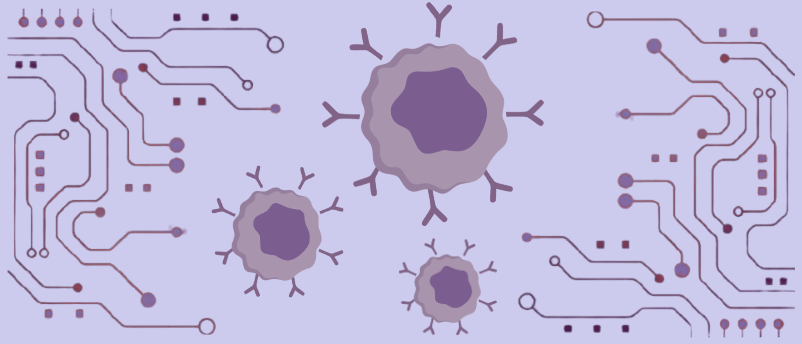
Could AI hold the key to answering questions that have stumped doctors and scientists for decades? A recent study at Cold Spring Harbor Laboratory (NY, USA) borrows concepts from machine learning to address an age-old riddle of immunology.
In the thymus, the immune system’s T cells are trained to avoid attacking healthy tissue via a process called negative selection. There, T cells are tested on whether they bind to fragments of the body’s own proteins, called self-peptides. Those that do are immediately deleted. However, each T cell encounters only a small fraction of the enormous number of self-peptides abounding throughout the body. So, how does the immune system learn to tolerate the rest?
“This has long been an open question in immunology,” explained Hannah Meyer. “Negative selection is a crucial process, but if T cells had to test against every single one of the body’s peptides, it would take forever. So, how do they learn to avoid friendly fire? We think it’s through a process called generalization.”
To anyone who’s worked in tech during the last 10 or so years, that word should ring a bell. “Machine learning deals with the generalization problem all the time,” Saket Navlakha explained. For example, to build a model that can detect dogs, you don’t need to train it on every single dog image on the Web. “Machine learning tells us that generalization is possible, but only under certain conditions. It’s not black magic. So, let’s try to look at this immunology question from that perspective.”
World-first AI-designed genomes generate 16 powerful new bacteria-killing viruses
In a world-first, scientists have used genome language models to generate new viruses that selectively target bacteria, raising hopes for new medicines.
Meyer, Navlakha and their team found that the immune system fulfills two key conditions necessary to learn through generalization. First, the abundance of self-peptides in the thymus closely mirrors their abundance in tissues throughout the body. In machine learning terms, the training data resemble the test data. Second, T-cell receptors are cross-reactive, meaning a single receptor can recognize several similar peptides, allowing the T cell to learn about peptides it never directly encounters.
The study shows that through this process, 90% of self-reactive T cells can be correctly deleted in the thymus despite each one encountering only 10% of the body’s self-peptides. Thus, the team’s research suggests our immune system accomplishes the impressive feat of negative selection through a biological kind of ‘generalization’.
To take their findings one important step further, the team asked whether failures of this generalization process could help explain autoimmunity – when the immune system wrongly attacks healthy tissue. Remarkably, the team’s AI model accurately reproduced features of autoimmune polyendocrine syndrome type 1, a rare autoimmune disease.
“We’re calling this direction ImmunoAI,” Navlakha noted. “We’re not trying to create AI inspired by the immune system, but we’re studying how the immune system solves fundamental machine learning problems. When we start to look at the immune system as if it’s another kind of AI, we may find out some surprising things about human health and disease.”
This article has been republished from the following materials. Material may have been edited for length and house style. For further information, please contact the cited source. Our press release publishing policy can be accessed here.
The post AI meets immunology: uncovering mysteries of the immune system with machine learning appeared first on BioTechniques.
Powered by WPeMatico