
BioTechniques News
Beatrice Bowlby
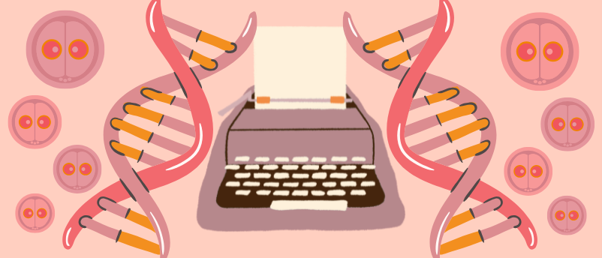
A DNA ‘typewriter’ records the history of 1.3 million cells in an early mouse embryo, telling the tale of mammalian development from fertilization to organ formation like never before.
Researchers from the University of Washington School of Medicine (WA, USA) have used a molecular tracking technology called DNA Typewriter to record the cellular lineage of a mouse embryo over nearly 2 weeks of development, from a single cell to over a million cells, with the potential to shed light on the origins of a range of congenital defects, neurodevelopmental disorders, genetic conditions and cancers.
During embryogenesis, a single-celled zygote divides and differentiates to form a multi-tissue, three-dimensional organism made of billions of cells. This complex process provides fundamental insights into human biology; however, much of it remains a mystery to scientists, who are diligently working to further our knowledge of the mechanisms underlying early embryo development.
One way in which they are doing this is by attempting to trace the ancestry of cells in developing organisms. This has previously been achieved in the roundworm Caenorhabditis elegans, which has a much simpler internal structure and far fewer cells than our own species, but efforts to replicate the feat in mammals have not had the same success.
In a bid to change that, the team turned to a technology called DNA Typewriter, which uses prime editing to essentially ‘stamp’ genetic barcodes onto a cell’s DNA. Invented in 2022 by two of the new study’s authors, the CRISPR-based method can be used to map the order of molecular events in a cell, providing a chronological record of cell divisions and lineage history.
“Think of it like an actual typewriter, except it types onto a cell’s own DNA instead of paper,” explained Haedong Kim, a co-first author of the study. “Every time a cell divides, it strikes one new character onto the next blank line – always in order, never overwriting what’s already there. Because the characters are always filled in sequence, that sequence itself spells out the cell’s division history.”
 Rhythm and cues: signaling oscillations inform cell differentiation in the intestine
The intestines use the rhythm of a signal to decide which cells to make, improving our understanding of healthy tissue maintenance and disease disruption.
Kim and colleagues inserted the instructions for DNA Typewriter into fertilized mouse eggs, which then developed for almost 2 weeks – around two-thirds the length of mouse gestation. From one embryo, they logged the phylogenetic history of 1.28 million cells, tracing the lineage from late organogenesis right back to the egg’s first cleavage, when a burst of editing unequivocally distinguishes the first two daughter cells. Because of this, the researchers revealed that one of these cells contributed more to the final progeny of the embryo – a phenomenon known as clonal dominance – and highlighted how a cell’s early ancestry dictates its later fate.
In addition, they were able to narrow down at what developmental stage each cell type broke off on its own path of differentiation. For example, blood cells and retinal cells committed fairly early on, whereas epidermal cells chose their fate much later.
Ultimately, the work brings us a step closer to chronicling mammalian development across an entire lifespan – marking a huge breakthrough for developmental biology. “This kind of large-scale developmental recording gives scientists a map of how one cell becomes a whole body – which helps explain how organs form correctly, how that process can go wrong in birth defects, and how abnormal cell growth drives cancer,” Kim concluded. “As stem cell engineering advances, this kind of recording can also help guide how we engineer cells for therapeutic use.”
The post How one cell becomes a body: DNA ‘typewriter’ reveals developmental history of mouse embryo appeared first on BioTechniques.
Powered by WPeMatico