
BioTechniques News
Tristan Free
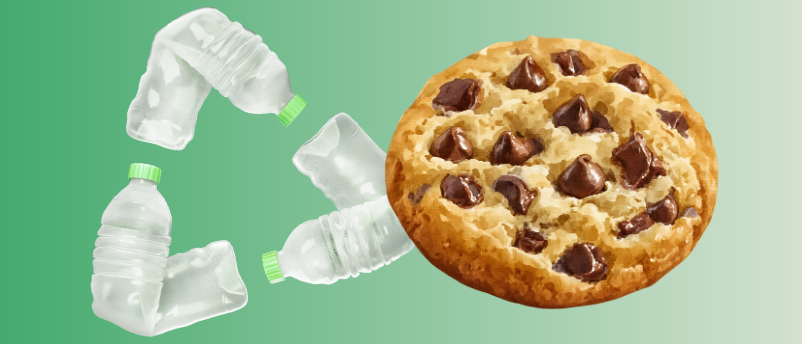
Move over, chocolate chip, and forget oatmeal raisin; waste plastic is our new favorite cookie flavor. Yes, you read that right: scientists have converted upcycled plastic into edible proteins and baked them into a biscuit.
By engineering yeast to turn plastic and agricultural waste into protein, researchers from Southern Illinois University Carbondale (IL, USA) have figured out a potential solution to address global food shortages and our planet’s plastic pollution crisis in one fell swoop. They 3D-printed their recycled proteins into edible cookies, and although they’re yet to be tasted, they reportedly look and smell good enough to eat.
As plastic pollution and food insecurity become increasing concerns, researchers are constantly on the lookout for inventive solutions to one, or both, of these issues. One promising approach for tackling the former involves reprogramming microbes to break down plastic into more useful products (much-needed medicines, for example).
Plastics, like polyethylene terephthalate (PET), contain lots of carbon, so why not try and convert it into protein and see if you can address food scarcity at the same time?
In previous research, the researchers 3D-printed edible cookies, dubbed µBites, using plastic-derived substrates and yeast. Now, the team is hoping to build on this and enhance the flavor, aroma and color of their sweet treats.
Starting with PET plastic and discarded biomass, the researchers used oxidative hydrothermal dissolution to break down the source material into low molecular weight, water-soluble products. These were then fed to safe-to-eat yeast strains – Saccharomyces boulardii, S. cerevisiae and Rhodosporidium toruloides – which were engineered to convert the molecules into new food ingredients, including proteins, fats and acids.
Specifically, they reprogrammed S. cerevisiae to produce vanillin, the compound responsible for the characteristic flavor and aroma of vanilla, from ferulic acid. Meanwhile, adaptive laboratory evolution of R. toruloides enhanced its ability to use ethylene glycol from PET as a carbon source to produce the vitamin A precursor β-carotene.
To these yeast-produced ingredients, the team added fiber, starch and sweetener and extruded the resulting mixture through a 3D printer, producing nutritionally enhanced cookies.
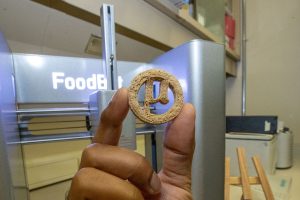
While µBites are technically safe to eat, they have not yet been approved for taste tests. However, the researchers report that they smell appetizing, and a survey indicated that most participants would be willing to eat them in resource-limited situations.
As a next step, they hope to produce all of the cookies’ ingredients, including the added starch, fiber and sweetener, using microbes. The work is in its early stages, but the team is optimistic that its confections could be ready for public consumption within just a few years. This, they write in their abstract, will “revolutionize the production of next-generation microbially derived food ingredients from waste organic carbon, contributing to a circular economy of plastics.”
The teams efforts come as part of the the NASA Deep Space Food Challenge, which explores concepts for food systems that could be used in resource-limited environments, such as the surface of Mars or the Moon, but their outlook for this research remained squarely on terra firma.
“Global food demand is expected to rise 35–56% by the year 2050, and about 30% of the world population will be at risk of hunger in the future. The way to address that, I believe, is by using microbes,” Lahiru Jayakody concluded.
The research was presented on 24 August 2026 at the American Chemical Society Fall Conference (Chicago, IL, USA; 23–27 August 2026).
The post This cookie contains an unexpected ingredient: waste plastic appeared first on BioTechniques.
Powered by WPeMatico